


bayangan awal ketika akan pergi ke belanda adalah negeri yang asing, yang sangat berbeda dengan Indonesia tentunya. akan tetapi, ternyata di balik perbedaannya (dengan indonesia) tinggal di sini masih terasa kental persahabatan, kekeluargaan dan ke-Indonesia-an masyarakat Indonesia yang kerja/sekolah di sini.
di Utrecht sendiri ada sebuah yayasan bernama SGB (Stitching Generasi Baru) yang merupakan wadah bagi warga Indonesia untuk bertemu dan berkegiatan. sebenarnya organisasi ini malah terbilang cukup baru jika dibandingkan dengan PPI (Perkumpulan Pelajar Indonesia) yang ada di Belanda ataupun Utrecht.
kalau datang ke Belanda, sebenarnya pelajar/ mahasiswa tidak perlu membawa bekal yang terlalu banyak dari Indonesia (termasuk makanan Instant) karena di sini banyak tersedia bahan makanan yang biasa kita jumpai di Indonesia. ya, tentu dengan harga yang berbeda tentunya. bahan-bahan makanan yang asia bisa dicari di toko-toko china yang biasanya namanya pun toko.
si toko tersebut bisa ditemukan berbagai bahan makanan mulai dari instan (indomie dan mie sedap) hingga yang segar (seperti tempe, tahu, cabe rawit, sayuran, petai, dsb). jadi, tidak perlu membawa terlalu banyak makanan.
untuk keperluan sehari-hari pun banyak produk yang bisa ditemukan dengan mudah, sehingga tidak perlu membawa barang-barang yang akan memberatkan koper karena ada batasan berat koper untuk masuk ke bagasi bukan?
untuk keperluan sandang, pada bulan desember hingga januari rata-rata banyak diskon di toko-toko termasuk yang bermerk (seperti Zara). mereka memberi diskon hingga 70%, dengan harga yang tidak dinaikkan terlebih dahulu (tidak seperti di banyak pusat perbelanjaan di Indonesia).jadi, kalau tidak membawa banyak baju pun tak masalah.
sebenarnya jika tidak malu bisa pula belanja di toko second hand, yang harganya jauuuh lebih murah dan dengan kualitas yang cukup bagus. terkadang malah ada hibah baju (termasuk baju hangat) dari senior (ini terjadi dengan saya), jadi, tidak perlu terlalu banyak membawa barang dari Indonesia kan?
oh ya, yang penting harus dipersiapkan dari Indonesia adalah
1. belajar naik sepeda (jika belum bisa). biaya untuk transportasi umum di Belanda cukup mahal, bahkan untuk ukuran orang belanda sendiri. jadi, mereka (dan banyak sekali orang di sini) yang memilih untuk naik sepeda dari pada naik bis jika masih memungkinkan. jadi, bagi calon penghuni belanda (mahasiswa/pekerja) yang belum bisa naik sepeda, lebih baik belajar naik sepeda.
2. belajarlah melakukan perbaikan sendiri. harga skill seseorang dihargai sangat tinggi di belanda. jadi, jangan heran jika hal-hal seperti menggati ban sepeda/potong rambut bisa menguras kocek cukup dalam (bisa jadi biayanya hingga puluhan euro). jadi, alangkah lebih baiknya jika mempunyai kemampuan untuk melakukan perbaikan-perbaikan ringan sendiri.
3. bawa botol minum dari Indonesia. menurut ibu kos saya yang sudah belasan tahun hidup di Belanda, banyak botol minum yang di jual di sini yang sering kali tumpah. jadi, saran saja mending bawa satu botol minum tupperware/ lion star/ lock n lock yang memang tahan banting untuk membawa bekal minum. soalnya, jika ada di belanda pun harganya pasti jauuuh lebih mahal.
4. oh ya, jangan lupa obat-obatan pribadi siapkan dari Indonesia ya. bisa saja kita belum tahu obat apa saja yang diperlukan. saran saja siih, perlu bawa obat-obatan bebas seperti vit c dan tolak angin (bagi yang biasa minum) untuk jaga-jaga kan cuaca di Belanda berbeda dengan Indonesia.
Bagi yang akan datang ke Belanda, semoga sukses. ^___^
02/02/14

30/01/14
Belajarlah hingga ke negri kincir angin
mendapatkan kesempatan untuk bisa menempuh bangku perkuliahan di negara Belanda ini menjadi sebuah dorongan serta cambukan agar bisa membenahi diri untuk bisa menjadi guru yang lebih baik nantinya. yang jelas kesempatan belajar ke tempat pengembangan RME ini insyaAllah bisa menjadi titik tolak kemampuan diri untuk jadi seorang pengajar yang lebih baik.
jadi, intinya..harus melakukan yang terbaik. karena banyak orang yang bahkan tidak mendapat kesempatan untuk belajar kemari. semangat!!!!
overvecth, 30 january 2014
jadi, intinya..harus melakukan yang terbaik. karena banyak orang yang bahkan tidak mendapat kesempatan untuk belajar kemari. semangat!!!!
overvecth, 30 january 2014
01/12/13
Permainan Logika Matematika
Lanjut
Nah, dulu sudah kenalan dengan Sudoku dan kakuro, kali
ini postingan ini akan membahas dua permainan lain yang nggak kalah asyik dan
yang pasti cocok untuk dipakai di kelas.
3. Fubuki
Yang pertama akan dibahas di postingan ini adalah fubuki.
Permainan ini mirip dengan kakuro yang menggunakan prinsip penjumlahan dan
perkalian. Selain itu, permainan ini juga masih menggunakan grid hanya saja
ukuran grid yang dipakai berbeda. Jika kakuro ukuran gridnya bisa bervariasi,
ukuran grid fubuki hanyalah 3 x 3.
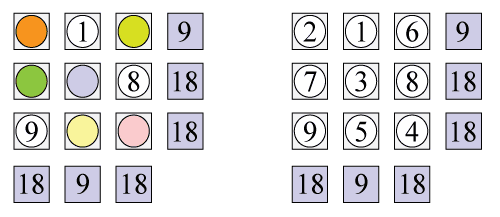 |
| Source: http://www.mathinenglish.com |
Untuk aturan permainan dan cara permainannya sama saja
dengan Sudoku dan kakuro, pemain hanya diminta untuk memasukkan angka 1 – 9 ke
dalam grid-grid itu dengan ketentuan tidak boleh ada angka berulang tentunya.
Permainan ini bisa dibilang aturan permainannya lebih mudah
dari dua permainan sebelumnya, karena di sini hanya satu set bilangan (1 – 9)
saja yang dipakai. Lebih jauh lagi, permainan ini memungkinkan penyelesaiannya
juga lebih cepat, karena jumlah soal yang lebih sedikit
Untuk mendapatkan versi printable dari math in English bisa
klik Fubuki
Untuk mendapatkan beberapa contoh fubuki dari web silahkan
klik Jeuxflashfubuki, Math in English, The Puzzleclub.com,
4. Shikaku
Permainan ini merupakan permainan lain dari jepang yaitu
Shikaku (四角に切れ (Shikaku Ni Kire)) punya
nama lain yaitu rectangles. Permainan ini berbeda dengan permainan sebelumnya
yang masih berhubungan dengan perhitungan aritmatika. Namun, permainan ini
tetap saja membutuhkan tenaga ekstra dalam menyelesaikan permasalahannya.
 |
| source http://cdn.marketplaceimages.windowsphone.com |
Permainan ini merupakan permainan grid, di mana pemain
diharuskan untuk membagi grid tadi menjadi persegi atau persegi panjang dengan
banyak kotak bergantung dari bilangan yang ditulis. Misalnya tertulis “8” di
dalam grid, artinya pemain bisa memiliki alternatif persegi panjang berukuran 8
x 1, atau 2 x 4 kotak. Jika tertulis angka 4, maka pemain bisa mendapatkan
persegi 2 x 2, atau persegi panjang 4 x 1. Pemain diharuskan untuk
menyelesaikan permainan ini dengan menemukan semua persegi dan atau persegi
panjang yang ditentukan oleh soal permainan ini.
Math in English menyebutkan bahwa bilangan prima adalah
bilangan yang paling mudah dicari bentuk persegi atau persegi panjangnya. Hal
ini dikarenakan sudah bisa dipastikan bahwa bilangan prima hanya akan memiliki
sebuah bentuk yaitu persegi panjang dengan ukuran 1 x bilangan itu sendiri.
Contohnya, 5, bentuk persegi panjang yang mungkin hanya 1 x 5 (atau
sebaliknya).
Sebenarnya permainan ini lebih mirip dengan puzzle, tetapi
guru dapat memanfaatkan permainan ini dalam pembelajaran mengenai luas dan
keliling persegi dan persegi panjang tentunya.
Untuk mendapatkan versi printout dari math in English bisa
didapatkan di shikaku
Untuk tahu lebih jauh tentang permainan ini silahkan buka Math in English, Nikoli
website,
Untuk sekarang, rasanya sekian dulu permaian yang bisa
dimanfaatkan. Untuk dapat permainan lain, tunggu postingan berikutnya ya.
^__^
Analisa Jawaban Siswa
youtube upload
 |
| dok. pribadi |
hal tersebut adalah
- Siswa secara langsung mengoperasikan semua angka yang mereka temukan dalam soal tanpa mencari tahu terlebih dahulu apa maksud soal. Terlihat bahwa siswa mengalami kesulitan dalam menjembatani permasalahan yang ada di kelas dengan kehidupan sehari-hari. Mereka bahkan terlihat seperti robot yang hanya mengerjakan soal sesuai dengan langkah yang ada.
- Siswa cukup bingung dengan hasil pembagian yang tidak ‘pas’ pada saat menghitung lompatan. Kembali, mereka tidak menghubungkan situasi tersebut dengan situasi melompat dalam kehidupan sehari-hari. Hal ini menjadi bukti lain bahwa materi yang diajarkan di sekolah tidak berkaitan dengan situasi dalam kehidupan sehari-hari.
semoga bermanfaat.. ^__^
teacher reflection
(A reflection to paper)
hmm.. sorry to give false alarm. here, i give you a reflection to paper
title: Games for Enhancing Sustainability of Year 7 Maths Classes in Indonesia: Theory-Driven Development, Testing and Analyses of Lessons, and of Students’ Outcomes
by Christa Kaune, Edyta Nowinska, Annika Paetau, Mathilde Griep
there are several parts of this paper that quite interesting in my opinion. those parts showed in the aim of the paper, examples given, inferred result from the examples, and the conclusion of the paper.
First,
when the aim was written, the author purposely state that the paper mean to argue that manipulative that we as teacher used to use is not a proper way bridging the knowledge students know and the lesson in classroom. the author state that the example that students already know and the manipulative teacher use have a substantial difference in the students' understanding. furthermore, lots of students think that lesson taught in the classroom differ from the prior knowledge they know.
the example given in this paper actually can enlighten teacher that the manipulative is not really effective because there is a different mathematics understanding between teacher (as an expert) and students (as novice). teachers need to not only make connection students' prior knowledge but also help students to built their undertanding.
you can read the complete examples in http://jims-b.org/ (find the correct paper)
as far as i am concern, this paper show us that not all manipulative is as effective as what we assume. teachers including me tend to create manipulative was made by our point of view, sometimes we forget that students can see what we teach (using those manipulative) is just a demonstration and rarely bridge it to the knowledge they already know. therefore, i think it's very important to use students knowledge to scaffold the new knowledge they learn in the classroom.
title: Games for Enhancing Sustainability of Year 7 Maths Classes in Indonesia: Theory-Driven Development, Testing and Analyses of Lessons, and of Students’ Outcomes
by Christa Kaune, Edyta Nowinska, Annika Paetau, Mathilde Griep
 |
| http://fairfieldmathadvocates.com |
First,
when the aim was written, the author purposely state that the paper mean to argue that manipulative that we as teacher used to use is not a proper way bridging the knowledge students know and the lesson in classroom. the author state that the example that students already know and the manipulative teacher use have a substantial difference in the students' understanding. furthermore, lots of students think that lesson taught in the classroom differ from the prior knowledge they know.
the example given in this paper actually can enlighten teacher that the manipulative is not really effective because there is a different mathematics understanding between teacher (as an expert) and students (as novice). teachers need to not only make connection students' prior knowledge but also help students to built their undertanding.
you can read the complete examples in http://jims-b.org/ (find the correct paper)
as far as i am concern, this paper show us that not all manipulative is as effective as what we assume. teachers including me tend to create manipulative was made by our point of view, sometimes we forget that students can see what we teach (using those manipulative) is just a demonstration and rarely bridge it to the knowledge they already know. therefore, i think it's very important to use students knowledge to scaffold the new knowledge they learn in the classroom.
alternative way teaching percentage
(reflection paper)
title: Solving Problems with The Percentage Bar
by Frans van Galen, Dolly van Eerde
it's been a while, i am not writing anything here. hereby, here i share an interesting reflection paper about percentage.i hope it will give some help.
This paper in general informs the reader how the result of
percentage lesson should be concerned. At first, Frans and Dolly gave result of
their study in grade 7 in understanding percentage. Those result showed that
most of the students tend do make some error when doing discount problem
despite it should be easy to be solved. Later on, they show other result when percentage
bar help those students solving the percentage problems. Furthermore, it is
also explained how percentage bar help students to understand the problem.
At the introduction part, the writer illustrated that from the results of their study in fourteen 7th graders. First, most of the students failed to find the correct answer. To be precise only 4 out of 14 that can solve the problem. this paper present the alternative way to teach percentage using percentage bar, or percentage table.
the percentage bar used as a tool to bridging the percentage and the amount its present. it can be seen as the picture below
 the percentage bar can be divided into 2, so the students can get 50%, or they can divide into 10%, or even 1%. when the students can use this bar effectively, they will not have any difficulties in solving percentage problems.
by Frans van Galen, Dolly van Eerde
it's been a while, i am not writing anything here. hereby, here i share an interesting reflection paper about percentage.i hope it will give some help.
 |
| source: http://www.oncalc.com |
At the introduction part, the writer illustrated that from the results of their study in fourteen 7th graders. First, most of the students failed to find the correct answer. To be precise only 4 out of 14 that can solve the problem. this paper present the alternative way to teach percentage using percentage bar, or percentage table.
the percentage bar used as a tool to bridging the percentage and the amount its present. it can be seen as the picture below

for the further inquiry about this method of teaching percentage please read by downloading the actual paper in http://jims-b.org/
07/11/13
example of contextual problems
hi everyone..it's been a while that i didn't write in this blog. i won't say that it was because i was too busy, sometimes it's just because some internet connection problems, sometimes i can say that i am lazy to upload t because there were no internet connections in my room, to the point it frustrated me.
so, here i give you some example of contextual using my hometown context. i already post the indonesian version of it in previous post.
 this first question is about one of traditional cake (if i could say that) in my hometown. actually, when you are look up for this cake in the internet it will directly connect to my hometown. the name of the cake is kamir.
 1.
Ms. Ani has been selling Kamir (a trsditional
cake from pemalang) for 10 years. She always packs the cake into a cartoon box.
However, this year she tried something new in the kamir packaging. She tried to
use a transparent box, instead of cartoon box. Therefore, anyone can see
through the box, the cakes packed.
1.
Ms. Ani has been selling Kamir (a trsditional
cake from pemalang) for 10 years. She always packs the cake into a cartoon box.
However, this year she tried something new in the kamir packaging. She tried to
use a transparent box, instead of cartoon box. Therefore, anyone can see
through the box, the cakes packed.

Side view
 the next problem related to one of annual festival in Pemalang. actually, i did not really remember about it, because i just went to see this festival once, years ago. actually, this festival is kind of traditional ceremony which is showing gratefulness and hope. there are lots of this festival akin in Indonesia. even in some places the festivals have the same name.
 Pemalang Tourism Department has been listing the number of boats participating each year. The number of the boats
participating in this festival could be seen in table below
Pemalang Tourism Department has been listing the number of boats participating each year. The number of the boats
participating in this festival could be seen in table below
 this last problem is about one of traditional clothes made in pemalang. even if there are lurik in Jogja or Solo, however both the motif and the color are kind of different. there are many people in my hometown that make this clothes are using non-machine weaver, they weave the clothes manually, using a manual weaver. the weaver itself is unique, it's my own opinion especially when the weavers use it. it's kind of complicated though. however, it's all paid off when the we got the clothes in the end. it is very beautiful and colorful, one of trademarks from north part of java (pantura).
 3.
To make a lurik cloth, weaver should weave thread
in certain sequence to get a certain motif.
3.
To make a lurik cloth, weaver should weave thread
in certain sequence to get a certain motif.
 Look at the picture in the right.
i hope it's helpful. ^_^
so, here i give you some example of contextual using my hometown context. i already post the indonesian version of it in previous post.
 this first question is about one of traditional cake (if i could say that) in my hometown. actually, when you are look up for this cake in the internet it will directly connect to my hometown. the name of the cake is kamir.
Mr Bambang, 5th grade teacher in
SD N 02 Banjardawa, bought a box of kamir from ms. Ani. Later on, he showed the
students this box and asked the student to guess how much kamir which is stored
in the box. However, Mr Bambang gave limitation to student and prohibited the
students to open the box. He just allowed the students to observe the box.
The picture below show the Dika’ s
observation result (he is one of the students there).
Front view
Side view
 |
|
Top view
 |
|
Using dika’s picture, could you guess how
much kamir inside the transparent box?
 the next problem related to one of annual festival in Pemalang. actually, i did not really remember about it, because i just went to see this festival once, years ago. actually, this festival is kind of traditional ceremony which is showing gratefulness and hope. there are lots of this festival akin in Indonesia. even in some places the festivals have the same name.
2.
Every Tuesday or Friday (kliwon) in Muharram
month each year, in Pemalang there is a festival called Baritan. The aim of
this festival is to show gratefulness to God by giving sacrifice in the sea.
Each year, there are lots of boats joining this festival, even though not all
of them are going to the sea to do the procession.
Pemalang Tourism Department has been listing the number of boats participating each year. The number of the boats
participating in this festival could be seen in table below
Boats’
participation in Baritan festival
Pemalang
tourism Department
(not
actual data)
year
|
The number of boats participating in the
festival
|
The Number of Boats went to the sea in
the festival
|
2008
|
20
|
15
|
2009
|
25
|
22
|
2010
|
29
|
21
|
2011
|
28
|
20
|
2012
|
27
|
19
|
According data above, find:
a.
The average of the number of boats participating
in the festival in 2008-2012
b.
The average of the number of boats went to the
sea in the festival in 2008-2012
c.
In which year, the number of the boats
participating reach the highest
 this last problem is about one of traditional clothes made in pemalang. even if there are lurik in Jogja or Solo, however both the motif and the color are kind of different. there are many people in my hometown that make this clothes are using non-machine weaver, they weave the clothes manually, using a manual weaver. the weaver itself is unique, it's my own opinion especially when the weavers use it. it's kind of complicated though. however, it's all paid off when the we got the clothes in the end. it is very beautiful and colorful, one of trademarks from north part of java (pantura). 3.
To make a lurik cloth, weaver should weave thread
in certain sequence to get a certain motif.
this last problem is about one of traditional clothes made in pemalang. even if there are lurik in Jogja or Solo, however both the motif and the color are kind of different. there are many people in my hometown that make this clothes are using non-machine weaver, they weave the clothes manually, using a manual weaver. the weaver itself is unique, it's my own opinion especially when the weavers use it. it's kind of complicated though. however, it's all paid off when the we got the clothes in the end. it is very beautiful and colorful, one of trademarks from north part of java (pantura). 3.
To make a lurik cloth, weaver should weave thread
in certain sequence to get a certain motif.
The picture shows a part of lurik cloth.
According to the picture, find the color of thread in line
a.
90th
b.
253rd
i hope it's helpful. ^_^
26/10/13
beberapa soal konteks
kabupaten Pemalang
 1.
Bu Ani sudah sepuluh tahun ini berjualan kamir
khas kota pemalang. Bu Ani selalu mengemas kue kamir dalam kotak makanan. Tahun
ini Bu Ani akan membuat terobosan dalam mengemas kue kamir. Kotak makanan yang
biasanya terbuat dari kertas diganti dengan menggunakan bahan yang transparan
sehingga kue-kue yang disusun di dalamnya terlihat dengan jelas.
1.
Bu Ani sudah sepuluh tahun ini berjualan kamir
khas kota pemalang. Bu Ani selalu mengemas kue kamir dalam kotak makanan. Tahun
ini Bu Ani akan membuat terobosan dalam mengemas kue kamir. Kotak makanan yang
biasanya terbuat dari kertas diganti dengan menggunakan bahan yang transparan
sehingga kue-kue yang disusun di dalamnya terlihat dengan jelas. Pak Bambang, guru kelas 5 SD N 02 Banjardawa, membeli sebuah kotak kue kamir ini dan memamerkannya di hadapan kelas. Pak Bambang meminta siswa untuk menebak banyaknya kue kamir yang ada dalam kotak tersebut tanpa mengeluarkan kue itu dari kotaknya. Pak Bambang hanya memperbolehkan siswa untuk mengamati kotak itu saja.
Nah, di bawah ini adalah gambar hasil
pengamatan Dika, salah satu siswa yang diajar oleh Pak Bambang.
Tampak depan


tampak atas

Nah,
dengan bantuan gambar Dika di atas, dapatkan kalian tebak berapa banyak kue
kamir yang ada dalam kotak yang dibawa pak Guru.

2.
Setiap hari selasa atau jum’at kliwon bulan
muharram tiap tahunnya, di Pemalang diadakan sebuah festival sedekah laut atau
yang lebih dikenal dengan nama ‘Baritan’. Dalam tiap tahunnya ada banyak kapal
yang ikut serta dalam festival ini. Akan tetapi, tidak semua kapal ikut melaut
untuk melarung persembahan ke laut. Berikut adalah data yang diperoleh dari
dinas pariwisata kabupaten Pemalang berkaitan dengan jumlah kapal yang ikut
memeriahkan Baritan.
Data
Partisipasi Kapal dalam Baritan
Dinas
Pariwisata Pemalang
(bukan
data sebenarnya)
Tahun
|
Jumlah Kapal yang berpartisiapsi
Baritan
|
Jumlah kapal yang melaut sewaktu
baritan
|
2008
|
20
|
15
|
2009
|
25
|
22
|
2010
|
29
|
21
|
2011
|
28
|
20
|
2012
|
27
|
19
|
Berdasarkan data pada tabel di atas,
tentukan
a.
Rata-rata jumlah kapal yang berpartisipasi pada
tahun 2008-2012
b.
Rata-rata jumlah kapal yang melaut sewaktu
baritan pada tahun 2008-2012
c.
Pada tahun berapakah, kapal berpartisipasi dalam
baritan memiliki jumlah paling banyak
 3.
Untuk membuat sebuah kain lurik, pengrajin
diharuskan untuk menenun benang dengan urutan tertentu agar bisa menghasilkan
kreasi warna yang indah.
3.
Untuk membuat sebuah kain lurik, pengrajin
diharuskan untuk menenun benang dengan urutan tertentu agar bisa menghasilkan
kreasi warna yang indah.  Perhatikan gambar kain lurik di samping
Gambar tersebut merupakan bagian dari
sebuah kain lurik
Dari data urutan benang yang dimiliki
tentukanlah benang warna apa yang digunakan perajin pada urutan benang ke:
a.
90
b.
253
untuk versi bahasa inggris dari soal ini akan saya upload di postingan yang lain.
Semoga bermanfaat..
^_^
